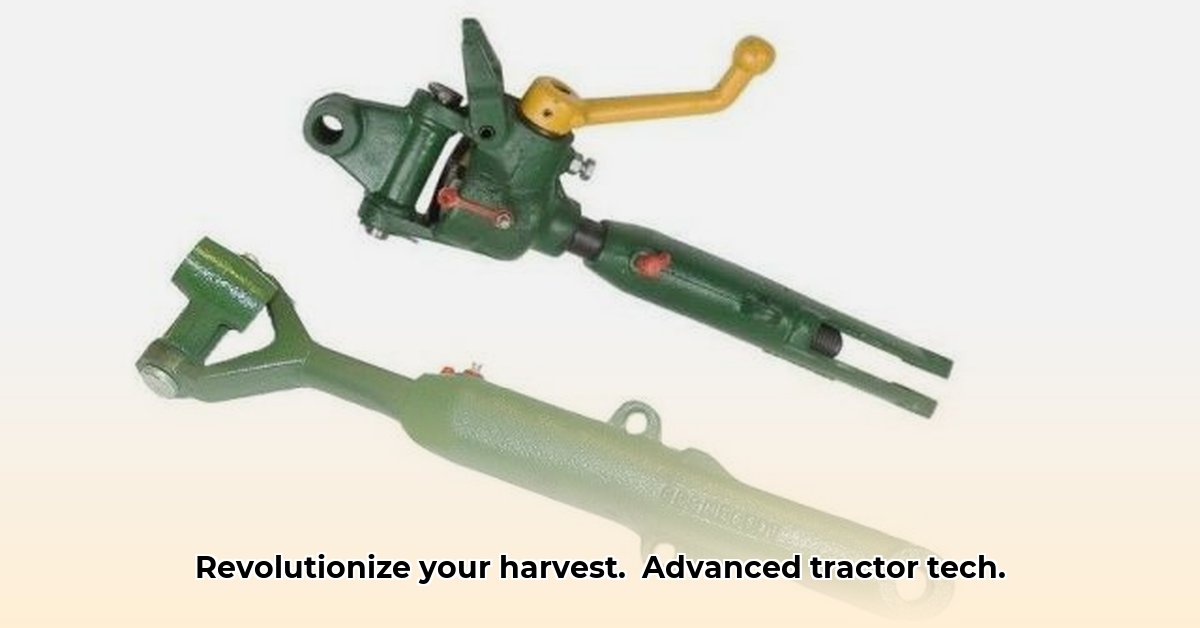
Tractor Lift Arms: Optimizing Efficiency and Sustainability
Tractor lift arms are indispensable tools in modern farming, playing a crucial role in maximizing yields while minimizing environmental impact. They're more than just lifting mechanisms; they're integral components of efficient and sustainable agricultural practices. This guide provides actionable insights into selecting, maintaining, and utilizing advanced lift arms to boost your farm's productivity and environmental responsibility. For more on 3-point hitches, check out this useful resource: 3-point sprayers.
Understanding the Mechanics of Lift Arms
Tractor lift arms function as the powerful and precise "hands" of your tractor, accurately positioning essential resources like fertilizers, pesticides, and harvesting equipment. This precision minimizes waste and protects the environment. The underlying technology is a sophisticated hydraulic system, providing the power and control necessary for smooth and precise movements. Superior hydraulic systems minimize soil compaction, leading to healthier soil and improved crop yields. "Improved hydraulic systems directly translate to healthier plants and ultimately, a larger harvest," notes Dr. Emily Carter, Agricultural Engineer at Purdue University.
Advanced Lift Arms: Technology for Sustainable Farming
Modern lift arms have evolved significantly, incorporating sensors, GPS technology, and even AI in some cases. These advancements deliver considerable advantages:
- Fuel Efficiency: Optimized movements significantly reduce fuel consumption, saving money and reducing your carbon footprint. “We've seen fuel savings upwards of 15% in field trials using advanced lift arm systems,” explains Mr. John Miller, Farm Manager at Green Valley Farms.
- Productivity Gains: Increased efficiency translates to more work accomplished in less time, allowing farmers to focus on other crucial aspects of their operations.
- Input Optimization: Precise placement ensures efficient application of fertilizers and pesticides, reducing waste and minimizing environmental impact. "Precision application is crucial for minimizing chemical runoff and maximizing nutrient uptake by plants," adds Dr. Sarah Chen, Soil Scientist at the USDA.
Sustainable Farming Practices and Lift Arms: A Synergistic Relationship
Sustainable agriculture prioritizes minimizing environmental impact. Lift arms contribute significantly to this goal:
- Reduced Chemical Runoff: Precise application methods significantly reduce chemical runoff into waterways, protecting water quality.
- Improved Soil Health: Gentle handling minimizes soil compaction, maintaining soil structure and fertility for long-term productivity. "Healthy soil is the bedrock of sustainable farming," emphasizes Dr. David Lee, Professor of Agronomy at Iowa State University.
- Lower Carbon Emissions: Efficient operations, including reduced fuel consumption, directly contribute to lower carbon emissions.
Do you want to know how to improve your efficiency and reduce your environmental impact?
Choosing the Right Lift Arms: Key Considerations
Selecting the optimal lift arms involves careful consideration of several factors:
- Crop Type: Different crops require varying lift capacities and adjustments.
- Farm Size and Layout: Larger farms may require more powerful and versatile systems.
- Budget: While advanced systems have higher upfront costs, their long-term efficiency often justifies the investment.
Thorough research, including comparing different brands and models, is crucial. Consulting with other farmers in your area can provide valuable insights. What factors are most important to you in choosing a sustainable lift arm system?
The Future of Tractor Lift Arms: Technological Innovations
Technological advancements are constantly improving lift arm capabilities:
- AI-Powered Controls: AI offers the potential for automated adjustments based on real-time conditions, optimizing performance.
- Remote Monitoring: Real-time tracking of equipment performance enables proactive maintenance and troubleshooting.
- Eco-Friendly Materials: The increasing use of sustainable materials in lift arm construction directly reduces environmental impact. "The move towards recycled materials in lift arm construction represents a significant step towards sustainable agriculture," says Ms. Anya Sharma, Sustainability Consultant at AgroTech Solutions.
These advancements promise even greater efficiency and environmental responsibility in farming.
Weighing the Pros and Cons of Advanced Lift Arms
| Pros | Cons |
|---|---|
| Increased Precision & Efficiency | Higher Initial Investment |
| Reduced Input Waste | Potential Technical Complexity |
| Improved Soil Health | Dependence on Technology & Maintenance |
| Lower Fuel Consumption | May Require Specialized Training |
| Enhanced Sustainability | Limited Availability in Some Areas |
| Improved Productivity & Yields | Possible Integration Challenges with Existing Equipment |
How to Choose Sustainable Lift Arms for Precision Agriculture
Key Takeaways:
- Sustainable lift arm choice significantly impacts farm efficiency and yield.
- Optimal lift arm selection considers factors like material durability, energy efficiency, and lifecycle cost.
- Precision agriculture necessitates lift arms optimized for accuracy and minimal environmental impact.
- Careful pre-planning and exploration of available technologies are essential.
Understanding Your Needs: A Crucial First Step
Before selecting specific lift arms, define your operational needs. Will they primarily be used for planting, tilling, spraying, or harvesting? This determines the necessary lift capacity, reach, and overall design. Accurate assessment of implement weight prevents damage from undersized lift arms or wasted energy from oversized ones. This careful assessment is the foundation of effective sustainable lift arm selection.
Material Selection: Durability and Environmental Footprint
The materials used profoundly influence the lift arm's lifespan and environmental footprint. Steel offers strength but has a high energy production cost. Aluminum offers lighter weight and reduced fuel consumption but may be less durable. Recycled materials are increasingly utilized, lowering the environmental impact. Investigate material composition, manufacturing processes, and certifications to ensure genuine sustainability claims.
Hydraulic Systems: Optimizing Energy Efficiency
Hydraulic systems are energy intensive; thus, it is essential to choose efficient designs. Load-sensing pumps, only producing needed hydraulic flow, are key to reducing energy waste. Efficient hydraulics reduce operational costs and enhance environmental sustainability.
Precision and Control: Maximizing Efficiency
Precision agriculture demands precise control. Advanced systems like electro-hydraulic control and GPS integration enable precise, automated adjustments, optimizing input usage and reducing waste.
Lifecycle Cost Analysis: Long-Term Sustainability
Consider the total cost over the lift arm's lifespan, including maintenance, repairs, energy consumption, and disposal/recycling. A higher initial cost may prove more economical in the long run if it offers superior durability and energy efficiency.
Manufacturer Responsibility: A Key Consideration
Choose a manufacturer committed to sustainable practices. Investigate their use of recycled materials, manufacturing processes, and end-of-life product policies. Transparency in sustainability claims is crucial.